Gaps and shortages - let's talk about literacy and numeracy
Over the last weeks, a flurry of research came out describing adult skills issues. The UK seems to be suffering from both skills gaps and skills shortages.
Where there is a skills gap, an employee is lacking some of the skills to do their job, and when there is a skills shortage, there is an employer who cannot find a skilled person to fill in a vacancy.
First, there was the UKCES employer skills survey that told us that employers think 1.4 million workers lack the skills to do their jobs in the UK. At the same time, employers cannot find people with right skills to fill vacancies meaning that there are skills shortages.
Then came the OECD report (PDF) that told us that nine million adults in England have low levels of functional literacy, numeracy or both and that five million of these nine million are at work.
And then approximately a week later there was the BIS research paper Impact of Poor Basic Literacy and Numeracy on Employers (PDF) that told us employers underestimate the prevalence of how many people in their staff have gaps in their literacy and numeracy skills.
What does this all mean? Basically, it means adults need more support and employers need to understand more about the impact lack of basic skills has in the workplace. Getting to grips with all this means that there is a chance to influence the skills shortages too.
However, there is a long way for some employers to go. The UKCES survey found that a third of employers do not offer training for their staff and over a third of people in employment have not been getting any training from their employer. The BIS research topped that by pointing out that "two thirds of workplaces with a reported basic skills gap do not provide basic skills training."
The skills gaps need to be plugged by making sure working people have access to English and maths learning. The obvious starting point is that employers work with unions.
Unions have real experience of supporting adult learners and convincing employers that learning benefits both the business and individuals. Unions negotiate with employers for time off for learning, run learning centres and encourage and enthuse people to take the first steps in brushing up their English and maths skills and much more.
So, whether you are an employee or an employer wanting to bridge the skills gaps or narrow the skills shortages, it is best to talk to the union first and do it now. Unionlearn will be happy to report all the positive stories and showcase what works.
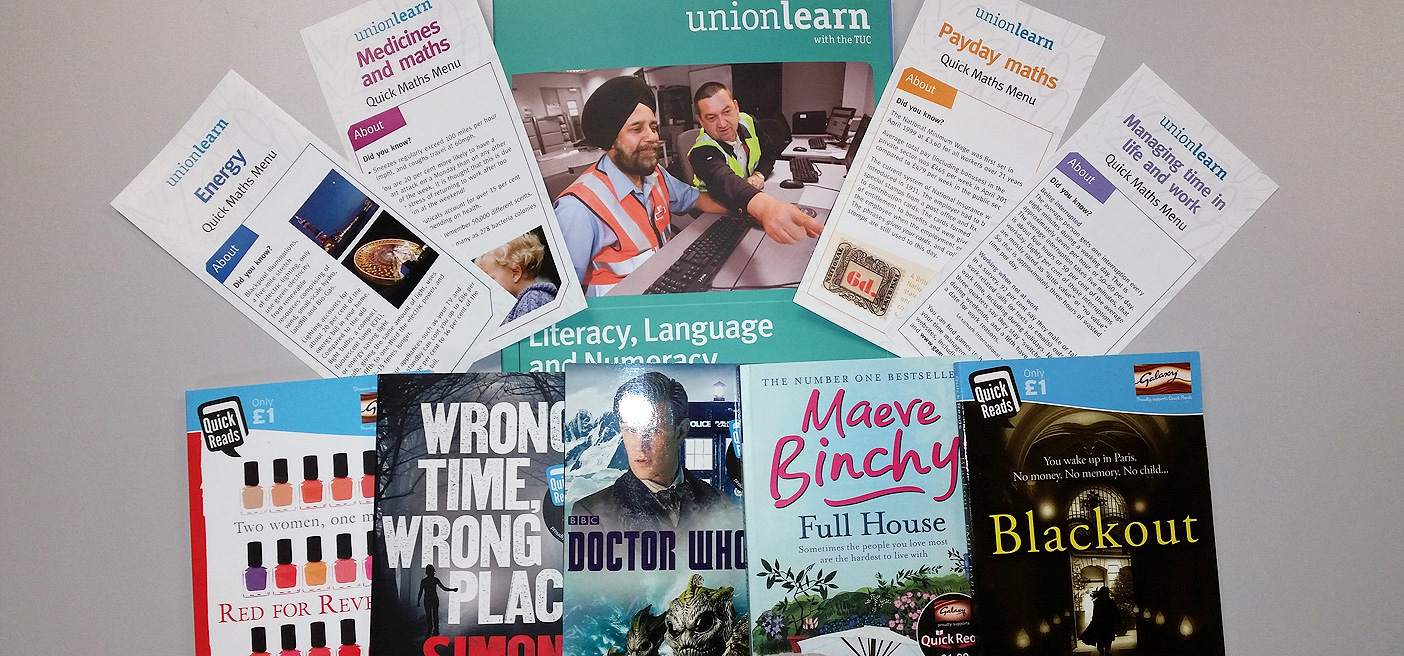
Unionlearn has launched a new guide to English and maths resources and tools, with case studies about how some unions have approached supporting their members' learning.