Older workers - Are we making most of this resource?
I read with interest the blog from Georgina Lee, co-founder of The Age of No Retirement, which aims to create a more neutral positive multigenerational society. Her organisation’s approach recognises the changing demographics and looks for positive and practical initiatives to make best use of the extended lifespan facing us.
Employers frequently bemoan the shortage of relevant skills, yet allow experience and skills to leave the workplace without exploring what they might do to make it more attractive for them to stay. This shouldn't start as workers approach retirement, but be part of the work experience for older workers, which the EU defines as 50 plus.
There has been much research and suggested strategies on the subject of older workers, but little research in to the practical steps that can be taken in the workplace to maximise the benefits and working environment for all. UnionLearn has led the way in encouraging workers through their trade unions to develop in work strategies (support for the Mid-Life Development campaign is an excellent example of this).
I represent the TUC on a current research project, Workage, which is designed to produce practical policy suggestions on workplace interventions that will improve engagement and retention of older workers.
The three-year project, funded by the EU, is being led by Nottingham Trent University in partnership with Workplace Innovation Limited (part of UKWON). The TUC itself commissioned research last year [https://www.tuc.org.uk/equality-issues/age-equality/representing-ageing-workforce-challenges-and-opportunities-trade-unions] looking at the challenges and opportunities for trade unions in representing an ageing workforce.
The report produced seven key recommendations and, in particular, recognised the diversity within the older workforce – those that delay retirement because they want to, while others that are compelled to work longer for economic reasons and others who want to work but are prevented from doing so by health reasons. Trade unions need to provide support in many different ways to meet these diverse needs and workplace interventions offers a solution to some of them.
Workage is identifying and piloting non-age related workplace interventions that enhance the engagement of workers aged over 50 years and delay the intention to retire as well as developing evidence-based workplace practices. Specifically, the interventions will focus on workplace innovation practices that enable people at all levels of an organisation to use and develop their skills to the fullest possible extent during their working lives.
Workage is concerned with four areas of workplace practice – work organisation, structures and work systems, learning and reflection, and workplace partnership. To help deliver and evaluate these interventions Workage has appointed three Change Facilitators from the two organisations being used to implement this project – Stoke-on-Trent City Council and the Southern Health and Social Care Trust in Northern Ireland.
Throughout the project, participation of the workforce and their trade unions has been entirely voluntary and the output of the interventions will be monitored and evaluated during and at the end of the project. Although only currently half way through the project, benefits are already being identified in workplaces where the project is taking place.
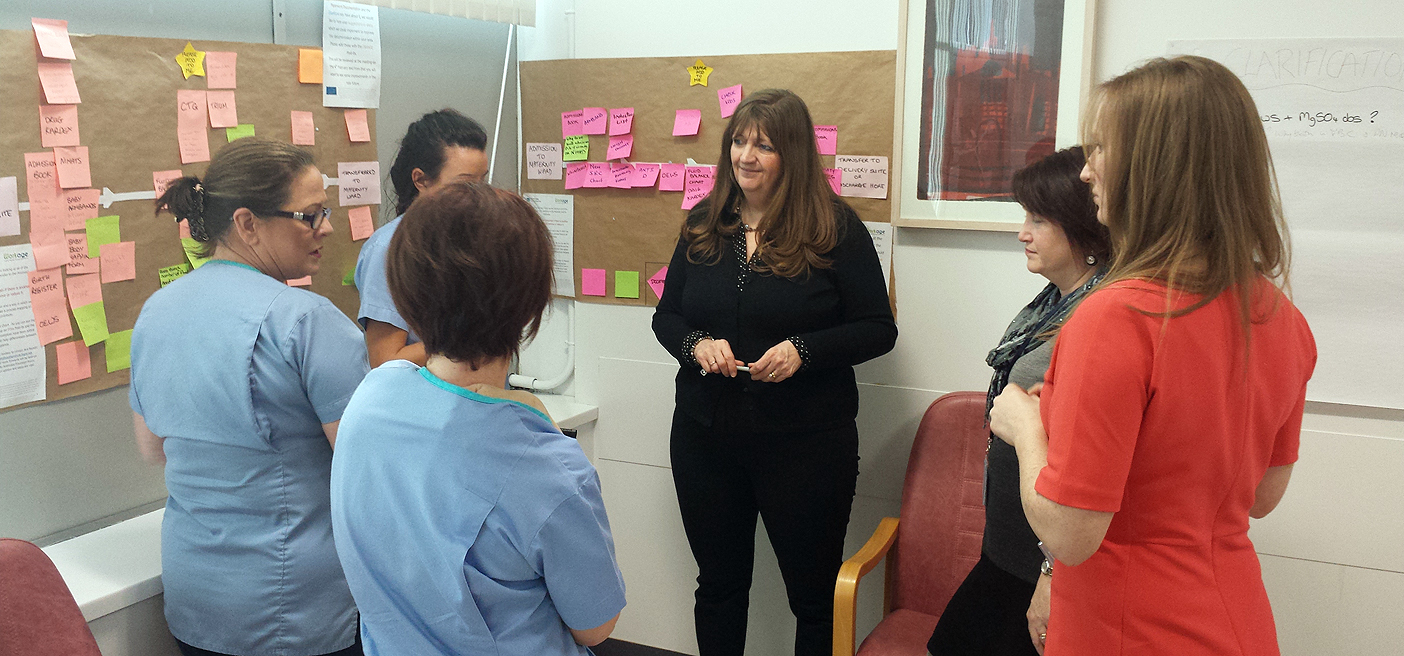
In Stoke, the mobile cleaning team has seen their ideas taken up and front line workers now participate in monthly meetings with management. In the Maternity Unit in the Southern Health and Social Care Trust, the project has resulted in multi-disciplinary team meetings now taking place monthly, improving participation and removing duplication. In both cases, the introduction of greater participation of workers at all levels is resulting in improved morale and a sense of well being.
The project team will be measuring the impact of the interventions and will return to undertake another survey of all staff after 12 months to evaluate the work and examine what if any impact the interventions might have on older workers and retirement decisions.
Fundamental to the success of this approach is the engagement of the social partners. This provides practical advantages for managing the programme of interventions and helps to create an industrial relations climate conducive to workplace innovation.
There are many initiatives that can be taken to improve the supply and retention of skills in the workplace. I believe that the practical work and research being undertaken by the Workage Project will be a useful contributor to this vital area of policy. The project will conclude in 2016 with major presentations being held across Europe.
More detailed information about the project and the outcomes of the pilot schemes can be obtained from the Workage project website or by contacting Roger Jeary: [email protected]