Part-time students - the ultimate 'hard-working people'
In his Summer Budget speech, Chancellor George Osborne spoke of "record numbers" of students from low income backgrounds applying for and succeeding in university, despite the impact of increased tuition fees. While it may be true that the number of full-time students has not changed much since the new funding regime came in, this is certainly not true for part-time students.
The truth is that their numbers have been plummeting: in England there has been a 41% decline in the number of part-time students over the past five years. That's 200,000 people who have missed out on the life-changing experience of HE study. So is there anything we can do to stem this tidal wave of lost opportunities? I strongly believe there is.
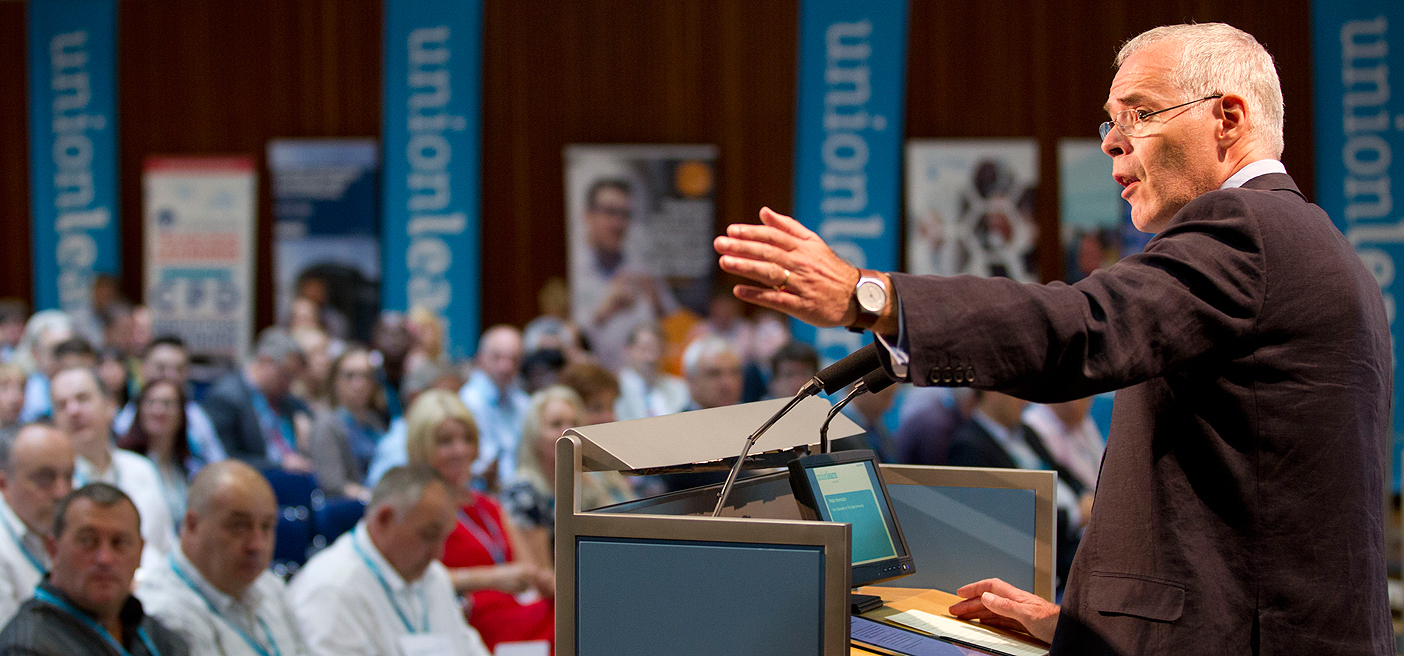
Part-time study is a cause I feel very passionate about. And I sense you feel the same. The warm welcome I received at the recent unionlearn conference was undoubtedly a sign of the excellent relationship our organisations have enjoyed for many years, based on our shared commitment to helping more people to access and succeed in higher education. The interest around the launch of our free online learners' guide – our latest initiative for learning facilitators – was very good to see.
Beyond this, your enthusiastic response to my speech showed me that you share our concerns over the challenges facing part-time higher education. It's a cause that has become a priority for me since becoming Vice-Chancellor of the OU, where I have been inspired by the many uplifting stories of students whose lives and careers have been transformed by part-time study.
Part-time students are the ultimate "hard-working people" that the Chancellor talked about in his Budget speech. They study hard while holding down jobs and very often pay off their loans promptly because they are already in employment. Gaining skills from university level study helps people get into work if they are unemployed, improves their earning potential and career chances, with obvious benefits for the individuals and their families and the economy. But the benefits go further. Research carried out by London Economics shows a halo effect in the workplace where one person upskilling can boost the productivity of a whole department.
Many are coming to part-time study because they are put off by the high cost of fulltime education, or because they have other commitments such as family or career. To those students, part-time education is quite simply the only option.
I feel heartened that there is a high-level of concern about this among politicians: 73% of MPs say they are concerned by the decline in the number of students in part-time Higher Education. Nevertheless, we still have a challenge on our hands to ensure part-time study remains at the forefront of the political agenda. This includes calling for loans to be available for shorter-term skills development, instead of the current situation where students have to be studying towards a full qualification at an intensity of at least 25% of that of a full-time student to be eligible for a loan.
We are also calling for the complete reversal of the Equivalent or Lower Qualification rule (ELQ), which means students cannot apply for a loan if they already hold a qualification of the same level to the one they're studying. This is crucial for the many people who are already in work and are looking at part-time study in a bid to retrain or upskill.
We know that part-time education doesn't just improve the lives of individuals like OU students or unionlearn members and their families – it has a ripple effect that impacts on all our lives. I am very glad to have the backing of unionlearn as we fight for recognition for the aims and aspirations of part-time students, and I call on all unionlearn members to join us in championing this critical part of our education sector.