Why offshore wind needs new entrants at every level
With 27,000 direct jobs in the UK’s world-leading offshore wind sector expected by 2030, there is increasing interest in getting into the industry and finding out not only what skills and qualifications are needed, but also what kind of jobs are out there.
RenewableUK has just held a highly successful Global Offshore Wind conference bringing together developers, original equipment manufacturers (OEMs), and supply chain companies delivering subsea services, cabling technology and training. The conference reflected on the achievements in the sector so far, and looked to the future, considering the latest cutting-edge technologies, achieving net zero emissions by 2050 and what this means in terms of the people, jobs and suppliers over the next decade.
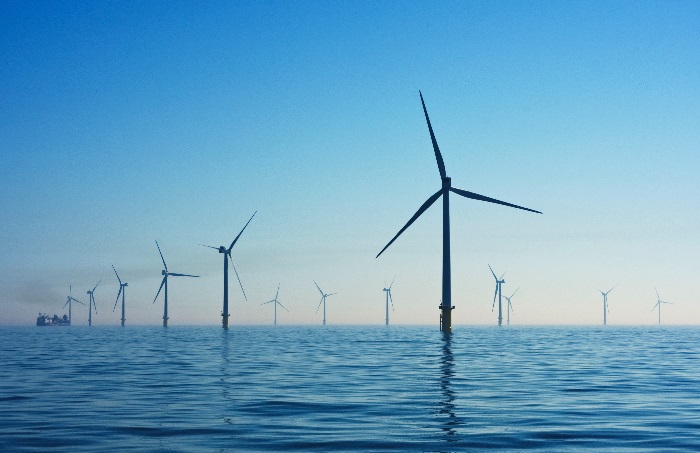
The growth of the offshore wind workforce is underpinned by the Government’s target for the industry to install 40 gigawatts (GW) of offshore wind capacity by 2030. That’s a quadrupling of our current capacity over the course of this decade. Planning new projects and bidding for contracts to generate clean power will be the first steps for developers. This will be followed by the procurement of a whole range of goods and services to build new infrastructure, the construction work will get underway, culminating in the long term jobs of operations and maintenance.
On top of the expectations for offshore wind, recent announcements have given a welcome boost to onshore wind which is now firmly back on the table, as well as solar and emerging technologies like floating wind and renewable hydrogen, as the UK readies itself to demonstrate significant progress in its journey towards net zero ahead of hosting COP26 next year.
While most people immediately think of manufacturing turbines when they think of jobs in renewables, our ‘Futures Forum’ mini conference for young people at our Global Offshore Wind event showed there is a wide range of roles, some of which are harder to fill with new recruits with the right skills than others. For example, people from mechanical or engineering backgrounds who’ve already worked in oil and gas will not only have great experience which is transferable to our sector, but also a health and safety mindset which is a sought-after skill. That’s why ex-military personnel are also a good fit for the offshore wind industry as they’ve worked in close quarters in challenging environments and have developed excellent communications and logistical skills - they’re great team players.
Companies are looking to recruit as widely as possible from the UK, which is a great opportunity for people looking to specialise. They need strong project managers, more quantity surveyors, specialised engineers such as geo-technical or marine experts and senior health and safety experts to ensure equipment is safe to work on.
There are also a whole range of support sectors from cabling experts, shipping, large machinery developers, operators and providers, training providers, drone operators, marine robotics, data analysts, as well as the roles ensuring improved efficiency of equipment or planning. Our workforce offers entry at all levels – for apprentice turbine technicians, graduates on training courses run by our major offshore wind developers, as well as experienced workers looking for fresh opportunities in dynamic and rapidly expanding industries like offshore wind.
The possibilities to play a role in this exciting and fast growing sector, which has proven to be robust in the face of Covid, are vast. Companies openly advertise their upcoming opportunities and procurement events for supply chain companies are now a regular fixture when the development of a new offshore wind project is about to get underway.
The sector is also committed to making its working environments as positive as possible. RenewableUK’s member companies are committed to a new Member Values Charter supporting safe, fair and respectful treatment of all those working in our industry. The sector has also published its first Diversity Guide to assist all those operating in renewables with practical guidance on improving its inclusion of under-represented groups, in particular women and those from ethnic minority communities.
There’s a place for everyone in one of Britain’s most successful modern industries, so we hope you will consider joining us, as we clean up the way we generate power, take meaningful action against climate change, and reboot the economy after the pandemic.