Writing about working class history
I was interested in Trade Union history, but it was a chance remark by someone that the full story of Angela Gradwell Tuckett had never been told that inspired me.
My advice to any fellow trade unionists who want to explore and write about working class history is to choose your subject well, something or someone you have a genuine interest in, and be prepared to spend time on the research. Like a campaign – prepare a work plan and timescale.
Be flexible as the facts unfold and new details emerge. Discover the basic facts first then look deeper. Looking at records held in libraries and museums is essential. Bristol Record Office and the Working Class Movement Library were particularly helpful, as was talking to people who knew Angela. Their memories were not always complimentary but portrayed the real person reflecting her flaws as well as her strengths.
People’s memories are not always accurate so always double check with the known facts.
Don’t get disillusioned when you’ve spent time researching one aspect only to discover there is no truth in what you‘ve followed up. Don’t embellish the facts. Remember you are telling a story and need to hold the reader’s interest, so amusing anecdotes are worth including.
Keep detailed notes including who you’ve spoken to or where you obtained the information, and get their written permission to use it. It may cost money, especially if you want to reproduce photographs, but not huge sums. It's worth it if you don’t want any action over copyright against you.
Once you have all the information, start writing. Find someone to edit it when you’ve finished and be prepared for the red crossings out all over your treasured manuscript! It will happen again at proof reading prior to publication. Check carefully – despite several proof readings, a couple of errors still managed to slip through into my finished book, including the date when all women got the vote. It just takes the slip of a finger on a keyboard!
Set a budget. I didn’t and was horrified afterwards when I added up how much I’d spent just on train fares and hotels bills. I funded my own research, but, if doing it again, I would try to find a sponsor. I found sponsors for the publication costs otherwise it would have been prohibitively expensive. Except in exceptional circumstances there is no money to be made in writing about radical history!
Luckily my local Trades Council, with help from TUC and two members who run their own publishing company, plus several trade unions, funded its production. Since Angela was the first woman to qualify as a solicitor in Bristol, a couple of specialist legal firms also sponsored the book.
Plan the book launch, publicity and distribution well in advance of publication so that press releases and copies of the book for review can be sent out as soon as the book arrives from the printers.
Then sit back and wait … !
Final piece of advice is to expect the unexpected, don’t lose heart when things go badly wrong, and don’t give up, your achievement will be worth it in the end.
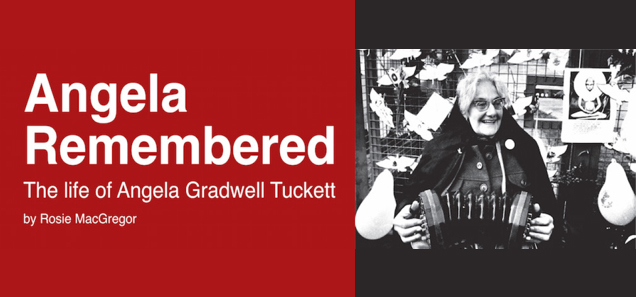
Angela Remembered - The Life of Angela Gradwell Tuckett (ISBN 9780957072633) is published by WaterMarx and is available from their website.