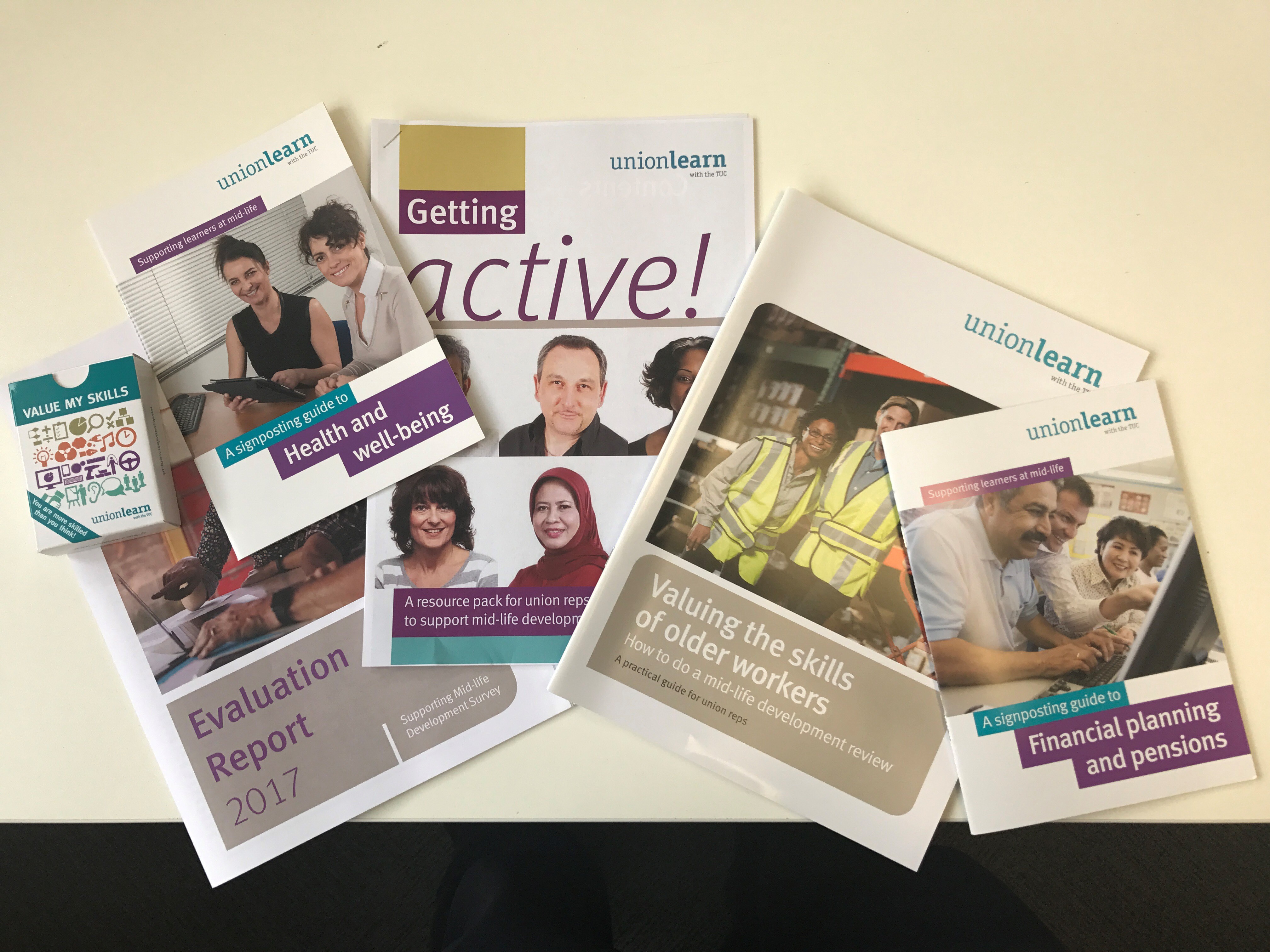
Mid-life development reviews are more important now than ever
By 2020 over 50s will make-up around a third of the working population. This is translated into union membership making supporting mid-life and older workers an important issue for trade unions.
There is hardly a day that goes by when we don’t read something new about the aging demographic. Coupled with issues such as the impact of Brexit, caring responsibilities, increases in the number of people suffering from mental health issues, children staying at home longer and the removal of the default retirement age gives society a lot to talk about. But I have barely scratched the surface of the issues impacting on older people the UK.
According to a poll taken earlier this year by the Chartered Institute of Professional Development (CIPD), older workers are preparing to work until they hit 70. Whether this is through choice or necessity it is a situation we need to plan for. This is not just an issue for us as individuals, but for the regeneration of trade union membership and for organisations to effectively deliver their goods and services.
It is estimated that by 2022, 14.5 million more jobs will be created but only 7 million younger workers will enter the workforce. This will leave 7.5 million roles unfilled and highlights a deficit of 7 million jobs that need to be filled.
CIPD pay and reward adviser, Charles Cotton, said that employers in the UK are "under-prepared to meet the needs of a maturing workforce". This is one of the reasons unions have been pressing for union-led Supporting Mid-life Development reviews in workplaces up and down the country, and remain the largest provider of workplace Supporting Mid-life Development reviews.
In 2017 unionlearn undertook a Supporting Mid-life Development survey. Individuals were asked if they thought they would stay in their current occupation until retirement. The 40% of people who answered yes was higher than expected and the 35% of people who answered don’t know could reflect the high levels of uncertainty for many individuals who just do not know what the future may hold.
This highlights the importance for people to have the opportunity to review their current situation and plan for their future. A Supporting Mid-life Development review provides this reflective space.
The 2017 Supporting Mid-life Development Survey evaluation report highlighted the importance of mid-life development to individuals. The unionlearn model provides a flexible menu of activities in three stages from which ULRs can select activities and resources to suit their workplaces. The model promotes partnership working with the employer and other specialist agencies.
Over a quarter of the 261 respondents stated that being involved in supporting mid-life development had improved relationships with managers/employers. 19% of the respondents reported that the activities had led to work related training. The survey shows that individuals gain many outcomes from the mid-life development review, including:
- Training (English, maths or IT) - 17%
- Progression to higher learning - 15%
- Requested a change in working hours - 14%
- Sought financial advice - 14%
In short, Supporting Mid-life Development reviews can be a great way for older workers to stay in the labour market longer. They can help avoid redundancy and are valuable tools to identify literacy, numeracy and ICT skills needs and engage harder to reach workers.
For more information visit the TUC Education and unionlearn websites.
Webinar: Supporting Mid-life and Older Workers https://www.tuceducation.org.uk/
Supporting Mid-life Development Survey https://www.unionlearn.org.uk/publications/supporting-midlife-development-survey-report
Valuing the skills of older workers – How to do a mid-life development review https://www.unionlearn.org.uk/publications/valuing-skills-older-workers-how-do-midlife-development-review